
As building systems become more complex, floor framing has to do more than simply carry loads. Builders increasingly need longer clear spans, faster installation and space for mechanical systems — all without compromising structural performance.
Floor trusses have emerged as a practical solution, combining engineered strength with the open-web design needed to accommodate modern building services.
Understanding how they work and how they compare to traditional joists helps clarify where they fit within today’s floor framing strategies.
What Are Floor Trusses?
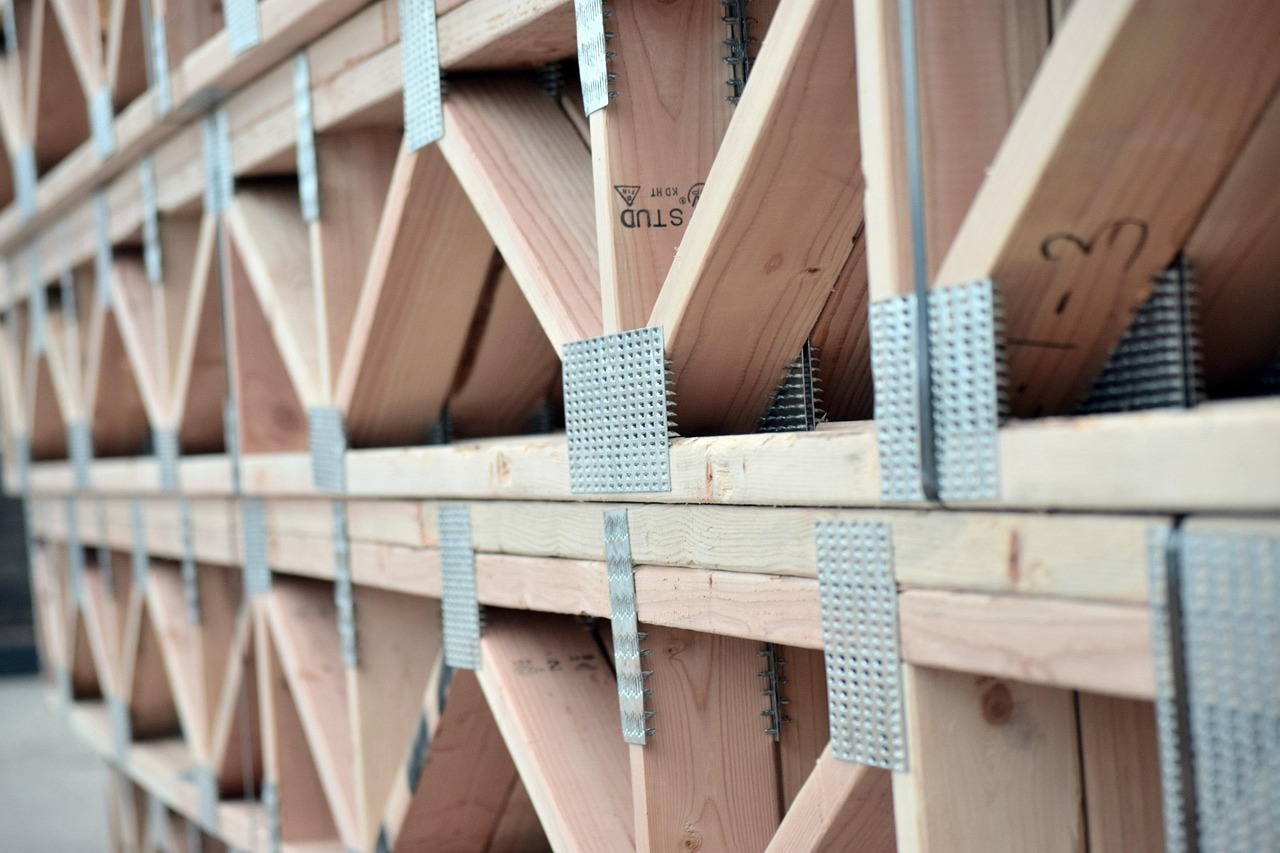
Floor trusses are open-web structures (typically wood, steel or a combination of both) engineered to carry floor loads while leaving space for HVAC, electrical and plumbing runs. The open webbing eliminates the need to drill or notch for these systems, saving time and reducing the risk of structural issues.
Though they can be built onsite, prefabricated trusses are the more common choice for professional builds, offering greater dimensional consistency, reduced material waste and faster installation.
Components of a Floor Truss
What differentiates a truss from a joist is its triangulated framework, which distributes loads more efficiently and delivers greater strength across longer spans.
Most floor trusses combine wooden beams with galvanized steel connector plates, though all-wood and all-metal configurations exist. The steel plates are pressed into the wood at every joint to hold components in place.
The main structural elements are:
- Top Chord: The uppermost beam, which directly supports the floor deck
- Bottom Chord: The lowest beam, which resists tension and typically serves as the ceiling joist for the floor below
- Webs: The diagonal and vertical members connecting the chords, forming the triangulated framework
- Panel Points: Where web members meet the chords
- Splices: Where two chords are joined end-to-end to create a longer beam
Some trusses also include cantilevers that extend beyond the floor edge to support balconies and chases for HVAC ducts or other mechanical systems.
Joist vs. Truss: Why Professionals Increasingly Specify Floor Trusses
Floor trusses offer several structural and practical advantages over traditional joists.
Longer Spans and Open Layouts
The triangulated framework allows floor trusses to span greater distances than joists. This reduces or eliminates the need for load-bearing walls and posts and allows for larger, more flexible floor plans without compromising structural integrity.
Integrated Mechanical Space
The open webbing accommodates HVAC, electrical and plumbing runs without drilling or notching, simplifying coordination between trades.
Prefabrication Benefits
Factory-manufactured trusses arrive dimensionally consistent, eliminating the risk of lumber warping or twisting. They also reduce onsite waste and labor compared to site-built joist systems.
Flat, Level Floors
Unlike sawn lumber joists, which can develop a natural crown, trusses produce a consistently level floor plane, an advantage for both finish and long-term performance.
Design and Engineering Considerations
The first step when planning and designing a floor truss system is to determine your project requirements. These include span length, live and dead load specifications and the mechanical, electrical and plumbing systems that need to be accommodated.
Design documentation should specify truss depth and spacing (typically between 12 and 24 inches), both of which will vary based on span length and load requirements.
Given the structural implications, it’s advisable to work with an experienced truss manufacturer during the design phase.
This can ensure code compliance, reduce the risk of design errors and streamline the overall construction timeline. Experienced suppliers may offer design support and technical guidance for floor truss projects of all scales.
Key Installation Tips
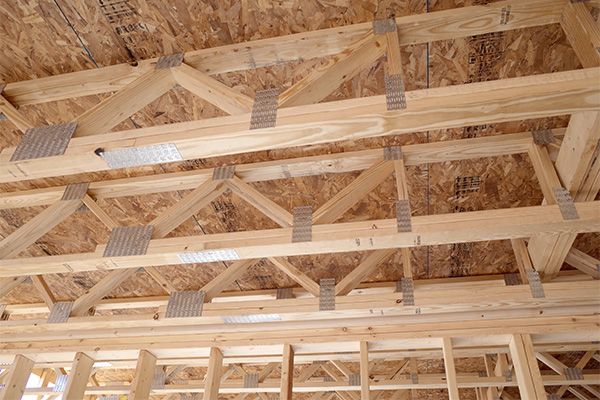
Installing floor trusses effectively requires careful planning, the right equipment and strict attention to safety.
Before Starting
Ensure you have the following on hand:
- Measuring and marking tools (tape measure, framing square)
- Power tools (drill, saw, nail gun)
- Structural fasteners (screws and nails)
For upper floors, a ladder, boom lift or crane may be required. Always ensure adequate PPE is worn throughout the job.
Site Preparation
Clear any debris, then measure the space and mark the positions of trusses and wall plates.
Positioning and Securing
Using lifting equipment, position each truss in place. Attach diagonal bracing to the rafters at 45-degree angles and nail the braces to the wall plate.
Verify that all trusses are vertically aligned and free from bowing before proceeding.
Final Checks
Once all trusses are positioned, braced and confirmed plumb, complete a final inspection before proceeding with decking or mechanical rough-ins.
Check all fastener points, confirm spacing matches the design documentation and ensure bracing is secure.
Common Mistakes and How to Avoid Them
Even experienced builders can run into problems when installing floor trusses. These are the most common mistakes to watch for and how to avoid them.
Changing Plans Mid-Installation
Modifying foundation plans after installation has begun is one of the costliest mistakes you can make. Finalize your design documentation before work starts and treat it as fixed.
Inaccurate Measurements
Measurement errors compound quickly in truss installation. Always check and double-check dimensions before positioning or fastening anything.
Undersized Bracing and Connector Plates
Using incorrectly sized hardware is a common shortcut that directly compromises structural integrity. Verify that all components meet the specifications in your design documentation.
Cutting Costs on Materials
Budget constraints are real, but low-quality materials carry long-term risks. Stick to reputable suppliers and check product reviews and load ratings before specifying.
Overlooking Code Compliance
All floor truss installations must meet local and national construction codes, including fire ratings, load path requirements and vibration control. If any of these fall outside your expertise, consider using a truss specialist early in the process.
Talk to the Floor Truss Experts at Berry Home Centers
At Berry Home Centers, we don’t just supply building materials — we help you build with confidence.
From floor and roof trusses to doors, windows, wall components, paint and power tools, we stock everything you need to take a project from plan to completion. Plus, if you need a specialized item, we’ll source it for you.
Our team brings real construction expertise to every conversation. Whether you’re in the early planning stages or troubleshooting mid-build, we’re here to help you make the right call.
Browse our full range of roof and floor trusses, explore our extensive product catalog or request a quote. Let’s get your project moving!