
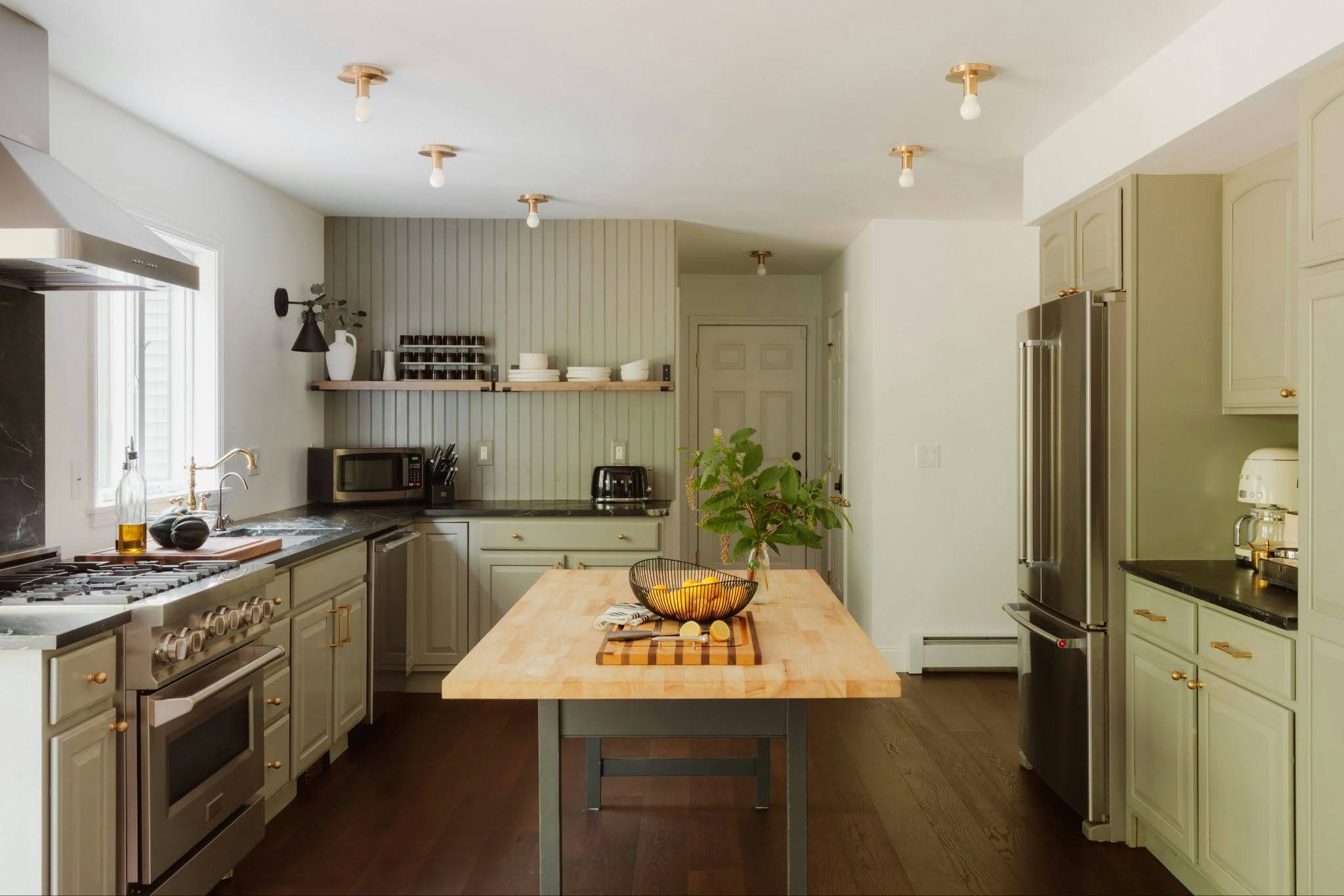
Butcher block kitchen islands are a sought-after feature in modern homes, bringing natural warmth to spaces where families gather. For builders, these surfaces are an opportunity to deliver something homeowners value: a kitchen centerpiece that feels both beautiful and built for real life.
Understanding butcher block kitchen islands means guiding clients through choices that shape both aesthetics and performance. Here’s how to create a kitchen island that homeowners treasure for years to come.
What Is Butcher Block?
Butcher block is a wood surface created by laminating individual strips of hardwood together to form a durable countertop or island surface. This construction method creates distinctive linear grain patterns that add character to kitchen designs.
Originally designed for commercial kitchens where chefs needed a resilient cutting surface, butcher blocks have evolved into a popular design choice for residential spaces.
Best Wood Types for Butcher Blocks
The wood species you choose for a butcher block island determines its appearance and how well it responds to everyday use.
Maple
Maple is the most popular choice for butcher block surfaces, thanks to its tight grain and natural hardness. The light color works well across different designs, from traditional to contemporary. Plus, its density resists scratches and dents better than softer woods.
Walnut
Walnut delivers rich, dark tones that add sophistication to kitchen spaces. The wood’s natural oils provide some moisture resistance, though it requires the same sealing attention as other species.
Cherry
Cherry develops a warm, reddish patina that deepens over time, giving kitchens a lived-in look. This wood falls in the mid-range for hardness, offering good durability for typical kitchen tasks.
Oak
Oak brings pronounced grain patterns and durability at a more accessible price point. The open grain requires thorough sealing to prevent moisture penetration, but once properly finished, oak performs reliably for years.
What Butcher Blocks Bring to Kitchen Design
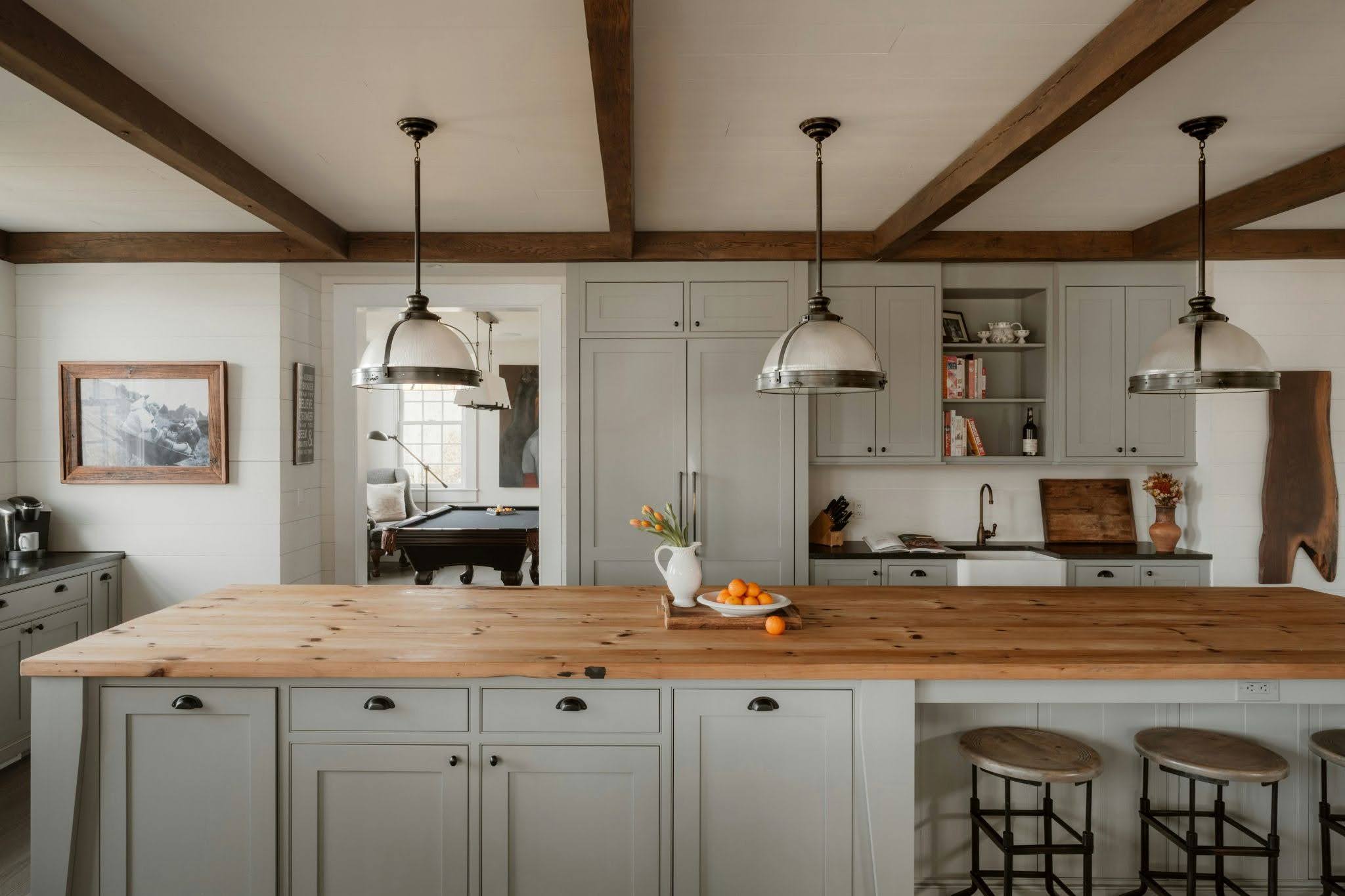
Butcher block kitchen islands serve as striking focal points, anchoring kitchens with a handcrafted, architectural presence. Here’s why builders continue to recommend wood surfaces even as newer materials enter the market.
Design Flexibility
Butcher block fits a wide range of kitchen styles and layouts. It can work as either a bold contrast piece or as a natural part of a cohesive, organic design. The grain patterns offer a grounding element among harder materials like stone and metal.
Versatile Food Prep Surface
Butcher block is an ideal workspace for meal prep. It’s gentle on knife edges while remaining durable enough for daily cooking tasks. Homeowners appreciate having a dedicated area that feels purpose-built for hands-on cooking.
Repairable and Refinishable
Butcher block can be sanded and refinished to remove scratches, stains and wear marks, allowing homeowners to refresh the surface when it becomes worn or as design preferences evolve.
How Butcher Block Compares to Other Countertop Materials
Butcher block behaves differently from stone or engineered surfaces, and knowing where it lands helps clients make the right call.
Wood is softer than quartz or granite, meaning it’s more susceptible to scratches and dents. Unlike non-porous materials, it needs regular sealing to stay protected against moisture and staining.
However, what it gives back is repairability. A stone kitchen island that gets damaged usually means a full replacement.
Butcher block can be sanded down and refinished multiple times over its life. For clients who want something that ages on its own terms and can be brought back when it needs it, that’s a real advantage.
Cost Factors to Consider
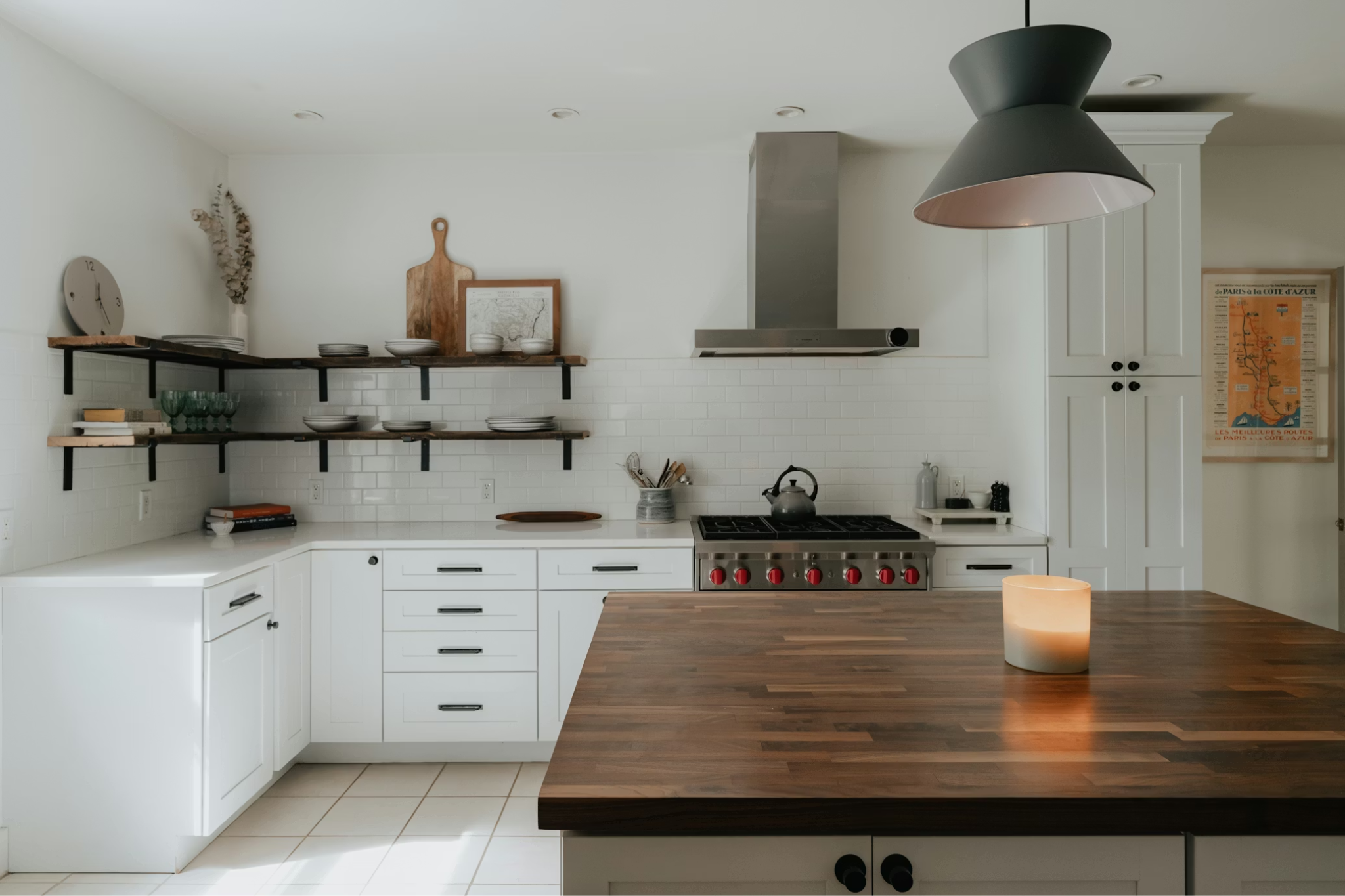
What you pay for a butcher block island depends on the wood species, thickness and level of customization.
Maple and oak are typically the most affordable options, while walnut and cherry cost more and can be harder to source. Details like edge profiles, custom sizing and fabrication will also increase the price.
Installation and long-term upkeep factor into the total cost as well. Butcher block usually costs less upfront than stone, but it requires ongoing maintenance.
For many homeowners, that’s a worthwhile trade-off: a lower initial investment, manageable maintenance and a surface that can be restored rather than replaced.
Ongoing Maintenance: Protecting the Investment
Proper maintenance plays a key role in how a butcher block island performs over time. Setting clear care expectations with homeowners helps preserve both appearance and durability.
- Choose the right finish. Food-grade mineral oil is best for surfaces used for cutting and food prep, while polyurethane or water-based sealers offer greater protection for general-use or high-traffic areas.
- Apply initial sealing thoroughly. New butcher block should receive multiple coats of finish to establish a strong barrier against moisture and staining.
- Establish a maintenance routine. Oil-finished surfaces require regular reapplication — more frequently at first, then less often as the wood becomes saturated. Sealed surfaces require less upkeep but should still be checked periodically for wear or damage.
- Clean properly. Routine cleaning helps protect the finish and maintain food safety. After contact with raw proteins, oil-finished surfaces should be sanitized with a diluted vinegar solution. Islands with a polyurethane or water-based sealant can be sanitized with a standard store-bought cleaning solution. Avoid scrubbing with a rough sponge to protect the finish.
- Sand and refinish as needed. Scratches, stains or general wear can be addressed by sanding the surface smooth and reapplying the appropriate finish.
Getting the Installation Right: 5 Key Considerations
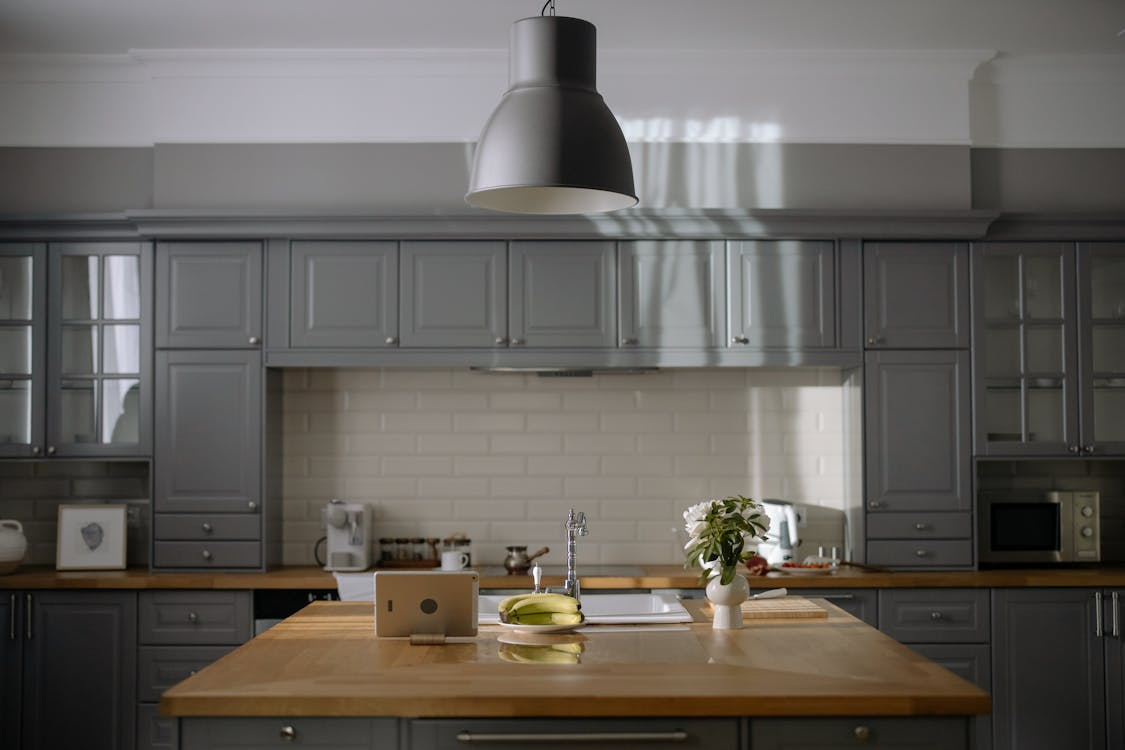
Installation requires careful attention to how wood moves, how the structure is supported and how the space will be used. Done correctly, it helps prevent issues like warping and premature wear.
- Acclimate the wood before installation. Allow the butcher block to adjust to the job site’s temperature and humidity for several days before cutting or installing.
- Seal all surfaces before installing. Apply the finish to the underside and edges before the island goes in, as these areas become difficult to access once installed.
- Account for wood movement. Butcher block expands and contracts with humidity changes, so fastening methods must allow for this natural movement.
- Allow clearance. Leave adequate space around the island for the wood to expand without binding against walls or cabinets. This prevents buckling during humid seasons.
- Provide adequate support. Butcher block is heavy on its own, and the weight increases further when the island includes storage or is used as a seating or dining area. The support structure should be designed to handle both the static weight of the countertop and the dynamic loads from everyday use.
Build With Berry Home Centers
Butcher block kitchen islands bring both function and timeless appeal to modern kitchens. When clients ask for a kitchen that feels considered and built to last, butcher block is a hard choice to argue with.
At Berry Home Centers, we are proud to offer premium butcher block tops sourced from industry leaders John Boos & Co. and CenterPointe by VT Industries, ensuring your project features the highest standard of craftsmanship and durability.
Ready to spec butcher block for your next kitchen project? Visit us in person to browse our countertops, compare wood species and finishes and find the right fit for your build.
Contact us today for pricing, material specs and project support.