
The right balance of style and practicality can turn an ordinary space into the heart of the home. Take the interior design of the kitchen, for
When planning an outdoor decking project, you’ll likely come across composite decking as an alternative to traditional wood. Choosing between the two can be challenging if you’re unsure how they differ or which products offer the best long-term value.
The best composite decking offers far greater durability, lower maintenance and longer-lasting visual appeal than traditional wood, though quality can vary significantly between brands.
Below, we highlight the top composite decking options to help you confidently choose the right materials for your next outdoor project.
What Is Composite Decking?
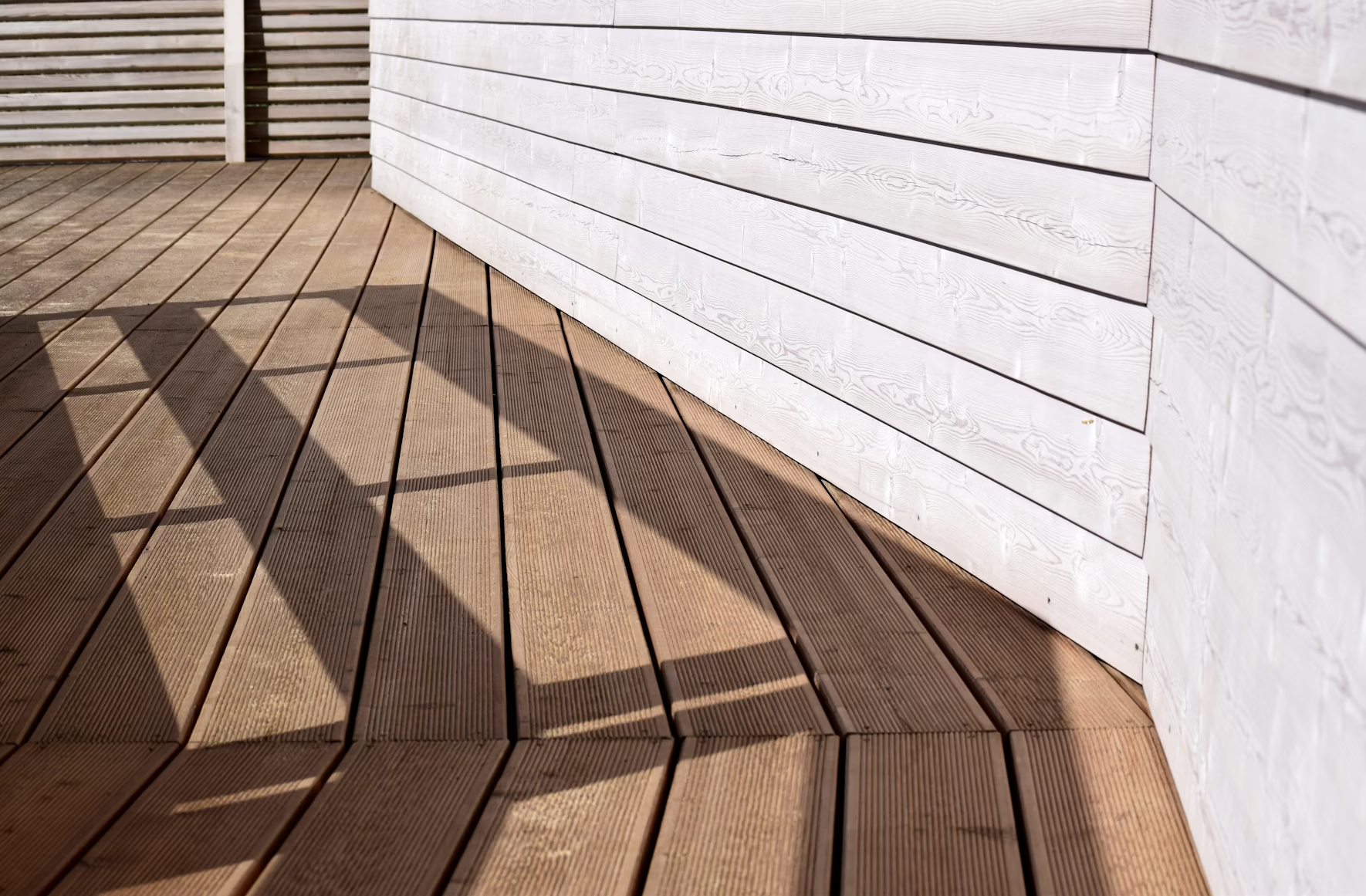
Composite decking is a building material made from a blend of recycled wood fibers and plastics such as PVC (polyvinyl chloride), along with bonding agents. It’s designed to replicate the natural look of real wood while offering the durability and performance of engineered materials.
Most composite decking is sold in “capped” versions, meaning the board is wrapped in a thin, protective outer layer. This cap helps shield the decking from moisture, fading and surface wear.
Uncapped options are also available and tend to present a more rustic appearance with a slightly rougher texture, but they typically offer less resistance to the elements over time.
Benefits Over Traditional Wood
One of the key benefits of composite decking over traditional wood decking is that it’s much more resistant to warping and rot because the plastic components (and the protective cap if included) reduce the effects of moisture intrusion. This makes composite decking particularly suited to rainy, snowy or humid climates.
Although many prize natural wood for its appearance, it typically requires regular staining and painting to maintain its attractiveness and prevent deterioration. Even with proper care, traditional wood decks often need to be replaced every decade or so due to physical and structural wear.
Composite boards require far less maintenance than natural wood, and because they’re sold pre-colored, there’s no need for painting or staining.
Best Composite Decking Brands
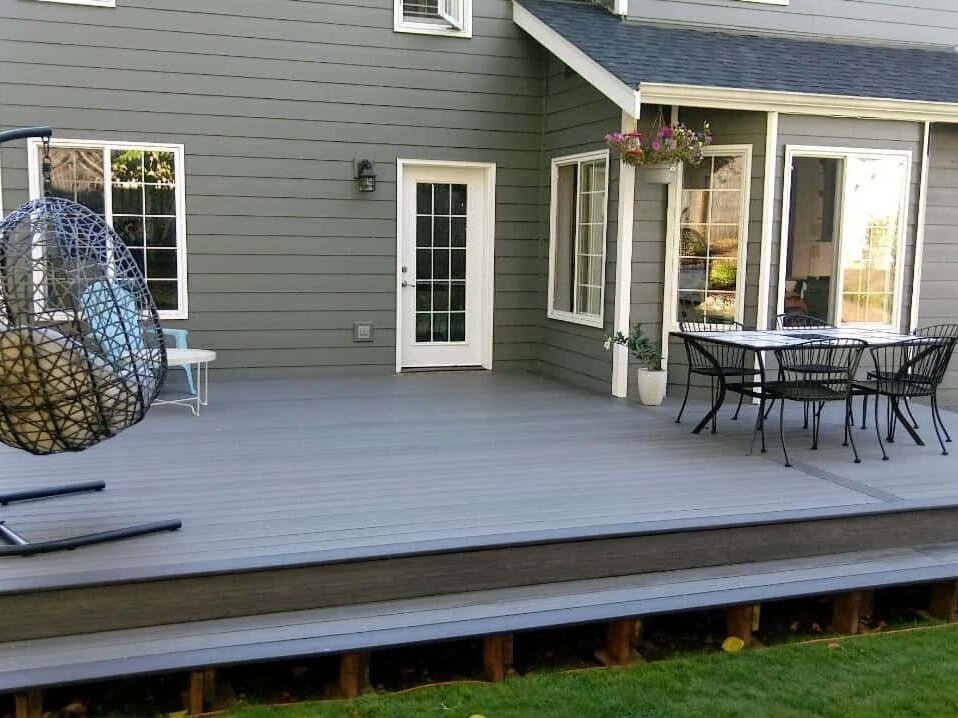
There are many manufacturers of decking products, but here are two of the best composite decking brands:
Trex
Based in Virginia, Trex has earned a strong reputation over the past three decades for producing high-quality, durable decking that requires minimal maintenance. Trex boards are made from a blend of reclaimed wood fibers and recycled plastic film, and the company prides itself on recycling 95% of its materials.
Trex offers several ranges of composite decking, including Trex Enhance, Trex Transcend and Trex Signature, providing options for every budget and need. Even its most affordable boards come with a 25-year warranty. In addition to decking, Trex provides a full suite of accessories, including deck fasteners, railing, lighting and drainage systems.
TimberTech
A subsidiary of Azek, a renowned outdoor living brand, TimberTech focuses on top-quality decking products designed with durability, style and sustainability in mind. Its composite boards combine up to 85% recycled wood fibers and plastic waste, topped with a proprietary polymer cap that protects the composite core.
Like Trex, TimberTech also offers a range of decking accessories, including railings, drainage systems and other related products.
Durability and Maintenance
To ensure long-lasting performance, choose a reputable brand like those mentioned above. Investing in high-quality composite decking can help you avoid costly replacements down the line.
Maintenance is another important consideration when selecting a decking product. Fortunately, composite decking requires far less upkeep than traditional wood.
To keep it looking fresh, simply sweep away leaves and debris, keep drainage gaps clear to prevent pooling and clean spills promptly with a soft brush, warm water and mild detergent. Avoid using harsh chemicals such as bleach.
Cost Considerations
The best composite decking usually comes with a higher upfront cost than traditional wood, but it’s worth comparing products and shopping around for deals. Many top brands include extended warranties, helping protect your investment and reduce the likelihood of costly replacements.
While composite decking may cost more upfront, it offers long-term savings. Its superior durability and minimal maintenance requirements, along with a lower risk of damage and degradation, make it a more cost-effective choice over traditional wood in the long run.
Environmental Impact
The global timber industry is a major contributor to deforestation, habitat loss and carbon emissions. Natural wood products are generally less sustainable and more environmentally damaging than composite alternatives.
Composite decking uses a smaller proportion of natural wood, and many manufacturers also incorporate recycled materials such as wood fibers, PVC or both, further reducing its environmental footprint.
Visit Berry Home Centers for Best Composite Decking Products
At Berry Home Centers, we carry composite decking ideas from trusted brands like Trex and TimberTech, with expert staff to guide you through every stage of your project.
We also offer a wide range of building materials, hardware, paints and tools for all your indoor and outdoor construction, renovation or DIY needs. Need a special-order product? Our team can help you get what you need for project success.
Turn your dream deck into reality — explore our composite decking options and get a quote today!